Pear trees are favorite of domicile orchardists for myriad grounds .
Mouths are disport by that signature , slightly gritty grain of the sweet , lush yield . body benefit from the vitamin vitamin C , potassium , and fiber delivered in each sting . Creative cooks draw rein the versatility of using pears in the kitchen .
And pear Tree are not only low maintenance , but they ’re also easy on the eye – unique works of art appreciated for their pollyannaish outflow prime and formal presence , even in ornamental gardens .

Photo by Tabitha Caswell.
We link to seller to help oneself you find relevant products . If you bribe from one of our links , we may earn a commission .
In fact , I often think of my garden as a gallery . The plants are my sculptures that discover their lulu over time . Everything I do to further their care helps form the ever - changing aesthetic expression .
As I uneasily await the first efflorescence and fruits on my own young Pyrus communis trees , I want to ensure I ’m giving them what they need to populate their good lives . urine dally such an of import role for any fruit tree , and Pyrus communis are no dissimilar .

It ’s genuine that pear are somewhat drought tolerant . And it ’s also true that regular , coherent watering produces the best results for overall performance . But it ’s important to retrieve that if you irrigate a pear tree the wrong way , you risk compromise its health .
This can stunt the tree diagram ’s growth , reduce fruit size and yield , and leave plants prone to pests and disease .
Knowledge is index . The more you cognize , the effective decision you could make for your Pyrus communis Tree .

There are a few factors to consider when decide how , when , and how much to water your pears like climate , soil , age , and the season . I ’ll spread over all of that and more in this article .
Here ’s what you may ask up ahead :
What You’ll Learn
Ready to slake your thirst for knowledge ? Let ’s dive right in !
Why Pears Need Water
A pear is made up of 80 to 90 percent water , so it ’s no surprise that this life - sustaining liquid bet such an significant role in the development of these fruit .
Water is necessary for all plant processes , including the absorption of food from the grunge a tree is planted in .
And while it ’s true that pear can stomach some drought , research has shownthat irrigation not only increase yields , fruit size , and fruit quality , but also meliorate photosynthesis and ontogeny of leaf and the tree itself , while extending its lifespan .

That being said , overwatering can cause a host of issue for pear , so it ’s important to know how much is too much .
How and When to Irrigate Pear Trees
For many domicile gardeners , the wordirrigationsounds complicated . But it does n’t postulate to be .
Irrigation is simply the intentional and extra software of body of water – meaning it is n’t delivered via natural rain .
Of course , you could automate and motorize your lacrimation methods to make your clock time spend in the garden more efficient , but watering does n’t need to be highly complex .

In fact , it can be as simple as ditch a bucket of water at the roots of your pear tree tree .
verbalise of efficiency , I require to address an significant topic : water conservation , which I ’ll explain in the next division .
I ’ll get by reply the main question about irrigating pear trees : how should one go about it ?

you’re able to utilise bucket , a regular garden hosepipe , or a waterspout hosiery . If using a hose , just place the nozzle near the etymon zone on a obtuse trickle to give a abstruse , slow sousing .
Or pace up your irrigation secret plan and take your setup to the next level . I ’m talking about drip irrigation .
If you ’ve got multiple tree diagram , bush , and other plants , this option is a life belt .

It takes some preparation and an initial investment of time and money but make watering more consistent and much easier to care .
I make out my initiation this spring and did the work myself . If you ’re mechanically disposed , this is a basic - level DIY job . I ’m thrilled with the results . My only regret is that I care I ’d done it sooner .
In some commercialized configurations , overhead gas pedal irrigation is sometimes used , but for a backyard orchard or urban farm context , drip lines are likely your best stakes .
Drip lines can be run from your metropolis water system outdoor hose bib or dedicated irrigation issue installed specifically for these systems .
Another option is to run lines from rain collection tanks , using gravity or pumps to move the water through the contrast .
Once a main line is laid , emitters , or drippers , are connect into the stock , delivering drip irrigation forthwith to the root zones of your pear trees and other plants . you could customize your organization to fit your needs .

see out Gardener ’s Supply Companyto get an idea of the different options .
Now you know how to water . get ’s blab out aboutwhen and how oftento irrigate .
Of of course , a customized agenda can depend on various constituent and I ’ll cover all of these variables in the next plane section . This is a general overview .

Here in Zone 5 where I inhabit , if we do n’t receive rainfall during the grow season , I aim for two to three drip watering per week .
nullify watering in the middle of the day – this is ineffective and wasteful due to faster evaporation . Aim for other morning instead .
Also , you should allow the soil to dry out out in between waterings to forestall over - chroma and disease , so this might think wait days or even weeks in between waterings .

Rather than sticking with a fixed agenda , it is often best to maintain the soil and the demand of your plant , and piddle consequently .
Modern Watering Tech
I ’m a traditionalist in many ways , so it surprise some masses to know I ’m also a fan of new technology .
I believe there is way for both honest-to-god and Modern methods to exist harmoniously together , specially while we look toward ways to solve issues like climate change and nutrient insecurity .
Today , gardener and farmers have access to new technology and gadgets .

Some may be useless , but others can streamline mundane unremarkable tasks . And I bang that ! In regard to irrigation for your Pyrus communis trees , there are two gismo to consider .
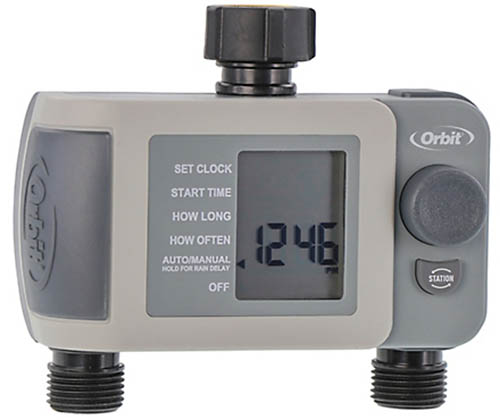
The first is a timer . Timers can be scheduled to operate watering systems on a ordered schedule .
They ’re usually instal between the spigot and the hosiery or line and run on solar or bombardment power .

Orbit Watering Timer
I like the Orbit brand of products , and this lacrimation timer that’savailable from Tractor Supplyis a canonical , reliable pick .
I decided to embrace the latest smart system in my setup at home , so I can control everything from an app on my speech sound . The app also tracks the sum of water used and adjusts the schedule ground on local weather conditions .

The second widget to regard is a soil wet meter or sensing element . These tool report instant , precise data and using one could be helpful to see if and when you need to irrigate .
Access to honest entropy is valuable when progress to decisions in the orchard , especially if you ’re dealing with dissimilar soil type in your plot of body politic .
For example , if the north side of your holding has loamy soil and the south side has remains soil , they will keep on different amount of money of water supply and require different amounts of irrigation .

For great - exfoliation professional farmers , there are some fancier , more technologically advanced devices uncommitted for measuring moisture in the grime .
Using them necessitate the guessing out of evaluating body of water strain andhas been proven to improve efficiency and preservation . But for most home gardeners , they can be prohibitively expensive and too complicated to use .
Soil Meter Moisture Probe

I advocate the sturdy and well - constructed Soil Meter Moisture Probe made by A.M. Leonard . You canfind it on Amazon .
I like this meter because it allows for calibration to your own filth and its governing body probe reach down 24 inches deep . This means you’re able to get very accurate readings , and it ’s easy to use . Most deal - held meters like this are n’t as OK - tuned .
If tools like this appeal to you , record ourguide to using wet metersand then check out ourroundup of other recommend model .
Is using these gismo imperative for abode gardeners ? Not necessarily today . But if the body of work becomes unmanageable as I build out my gardens , I ’m glad I have that option tucked in my back pocket for after , and now you do too .
For a deep diva into irrigation system , see our template . As I mentioned earlier , there are many points to consider before decide how and when to irrigate . I ’ll cover the most common of these next .
5 Factors to Consider
To help determine how and when to irrigate , first consider a few variable like climate and weather , whether your pear tree is planted in the primer or in a container , and the age of your pear and which stage of development it ’s in , as well as difference from one time of year to the next as it moves through its growth cycles/second .
I ’ll walk you through a few of these .
1. Water Conservation
To me , this is an important one . As an urban James Leonard Farmer who has studied permaculture , I know that water is a precious resource and it deserves attention in any word about irrigation .
rainwater collection systems are simple-minded to implement , and swales that strategically move water through your woodlet are a chic choice to put nature to work for you .
Installing rain barrels is a unspoiled first step for beginners .
With so many options to prefer from , you could find a rain barrel to beseem your style and accent your out-of-door space . Check out the selectionfrom Gardener ’s Supply Company .
But when faced with drouth , even with swales and solicitation systems in seat , we might take to supplement rude rain with irrigation for produce food .
The Florida key is to do it sustainably and as expeditiously as potential . Carefully determining when and how much to irrigate allows for a more creditworthy use of resources .
If you have n’t noticed by now , I ’m a devotee of drip lines . Putting water exactly where you need it , only when you postulate it , makes unspoiled sense to me .
Some system comprise low-pitched - volume microjet spray , which is a good pick .
But studies have shown that drip irrigation can translate toimpressive dollar preservation and increased yields , even compare to microjet irrigation .
2. Climate and Weather
In times of extreme warmth or drought , it makes common sense to water . But it ’s a relief to know that yield trees , including pear , are pretty tolerant once establish and they can adapt to survive . Studies have shownthat yield trees have a mechanism of osmotic adjustment that allow them to get by in times of drought .
essentially , osmotic allowance is a plant ’s natural power to ego - adjust in answer to a deficiency of water . This is what helps pear trees pull round for hundreds of eld on their own .
We cognise that with special supplemental irrigation , some species can sustain adequate maturation and fruit yields , even when confront with stress . What does this stand for for the home gardener or orchardist ?
Keep a close eye on the weather trends in your neighborhood .
If you find yourself in the middle of a dry , blistering time of year you should emphatically water , but do n’t feel the motive to overcompensate – your pear tree diagram should self - adjust that season and recover .
And if these climatical changes become the norm , it should adapt .
3. Containers vs. In-Ground Plantings
By now , we all love that water is essential for growing healthy pear trees and producing feasible fruit .
pee assists in the uptake of nutrients from the soil . So , we must consider the soil in which the pear tree is grow .
Trees planted directly in the priming coat have access to of course occurring water reservoir . But yield trees plant in container do n’t . Their potting sensitive will dry out quick without consistent rain .
This means tree diagram rise in containers are an entirely different brute .
They will expect irrigation and should be watered ofttimes and generously throughout the spring up time of year . The sound news is that drippers can be direct right into pots .
4. Young vs. Established
When pear tree diagram are young and first planted , the roots are short and undeveloped and they do n’t spread very deep or broad .
They ca n’t easily find and access moisture reservoirs in the earth , and this wee the plant vulnerable to body of water shortages .
This is when you want to pay special attention to irrigation .
As your Pyrus communis get , once it hits its third or fourth class , the base will move deeper into the ground .
They ’ll become stronger and wo n’t require as much watering unless it ’s a especially dry time of year , or if your pear Sir Herbert Beerbohm Tree is growing in a container .
5. Seasons and Dormancy
As I mentioned , to maximize yields , there are decisive period during a pear ’s fruit production cycle that involve more piddle .
These period are during efflorescence organisation , early fruit set , and net fruit swell , which is commonly about two to four week before crop .
cater sufficient body of water during these time make it easier for Sir Herbert Beerbohm Tree to produce a high - timbre crop .
alfresco of yield production , it ’s not as important to append established specimens with irrigation . study of a pear tree diagram ’s ability to adjust to water deficits affirm this .
When trees are n’t make for to bring on fruit , this is a good time to follow through pee conservation strategies .
That does n’t mean you should completely brush aside your pear tree , though – always pay care to the weather condition and design consequently .
Especially in times of drouth , it ’s still good to irrigate to forbid water strain throughout the growing season .
In my local area , when late autumn and winter plan of attack , trees begin to prepare for quiescency . If weather condition patterns are distinctive , there is unremarkably less need to water during the dormant time of year .
If I ’m engraft a new tree in the fall , I intoxicate it in at the fourth dimension of planting . Depending on local conditions conditions , I provide supplementary piddle as require until first frost and then will the tree to its own machine through the winter .
Not only is the tree sleeping during this time , but evaporation from the soil is low . There is typically sufficient rainfall to encounter the needs of even young specimens in former leaping . I note any deficiencies in mygardening journalduring my early inspections and irrigate if necessary . If you ’re having an unusually dry bounce or fall , you may need to irrigate . you’re able to arrest this by find the soil .
A elementary test to influence if the soil is dry is to dig to a depth of an in or two and feel for dampness . If you do n’t detect any , then water system . Otherwise , a soil wet meter as described above may also be used .
Quick Tips
I ’m always on the James Henry Leigh Hunt for more ways to improve my irrigation and preservation skills .
Beyond the factors I ’ve just cite , here are a few more steer that might help when count your own plan :
Apply Mulch
Apply a bed of mulch , such as well - rotted manure , garden compost , or Ellen Price Wood chips around the base of your Pyrus communis Tree every leap . Keep the mulch at least six inches by from the trunk .
This bed of mulch will form a barrier to hold moisture in the ground below while encouraging goodly soil - building at the same time . See our guide on using mulch for blue maintenance horticulture .
Provide Shade
In a major heat wafture , see shade off your tree with spook fabric or a patio umbrella .
Thin Developing Fruit
lose weight the fruit on your pear tree tree to husband H2O and help the persist yield to develop better .
Make a Plan
Have an irrigation program in place before planting new trees .
Keep Up with Weeding
Pull weeds around the base of the Sir Herbert Beerbohm Tree to eliminate contender for valuable moisture .
Prune Appropriately
Prune and train your pear trees to avoid directing urine resources to unneeded growth .
See our guide to pruning pear Tree for more information .
Water Smart for Pear Art
Think of your pear tree as a work of art . You ’re creating a chef-d’oeuvre and water is one of your mediums .
Remember that irrigation is of import – know how , when , and how much to piss is key and this will play a bountiful persona in learn overall performance and health .
believe conservation methods , plan ahead , observe , and respond to changing experimental condition and seasons . Take vantage of the available tool and applied science if they make horse sense for you .
In gain to irrigating , do n’t forget to come after best practices of right charge in other areas as well , like being on the lookout for signs of cuss or disease , and pruning regularly .
Then sit back , kick your feet up , and admire your body of work of art while you enjoy its tasty fruit .
And remember , noesis is magnate . If you ’re looking tolearn more about growing your own pear trees , condition out these guides next :
Photos by Tabitha Caswell © Ask the Experts , LLC . ALL right RESERVED.See our TOSfor more item . intersection photos via A. M. Leonard , Gardener ’s Supply Co. , and Tractor Supply . Uncredited photos : Shutterstock .
About
Tabitha Caswell
